

Parent Ed Programs
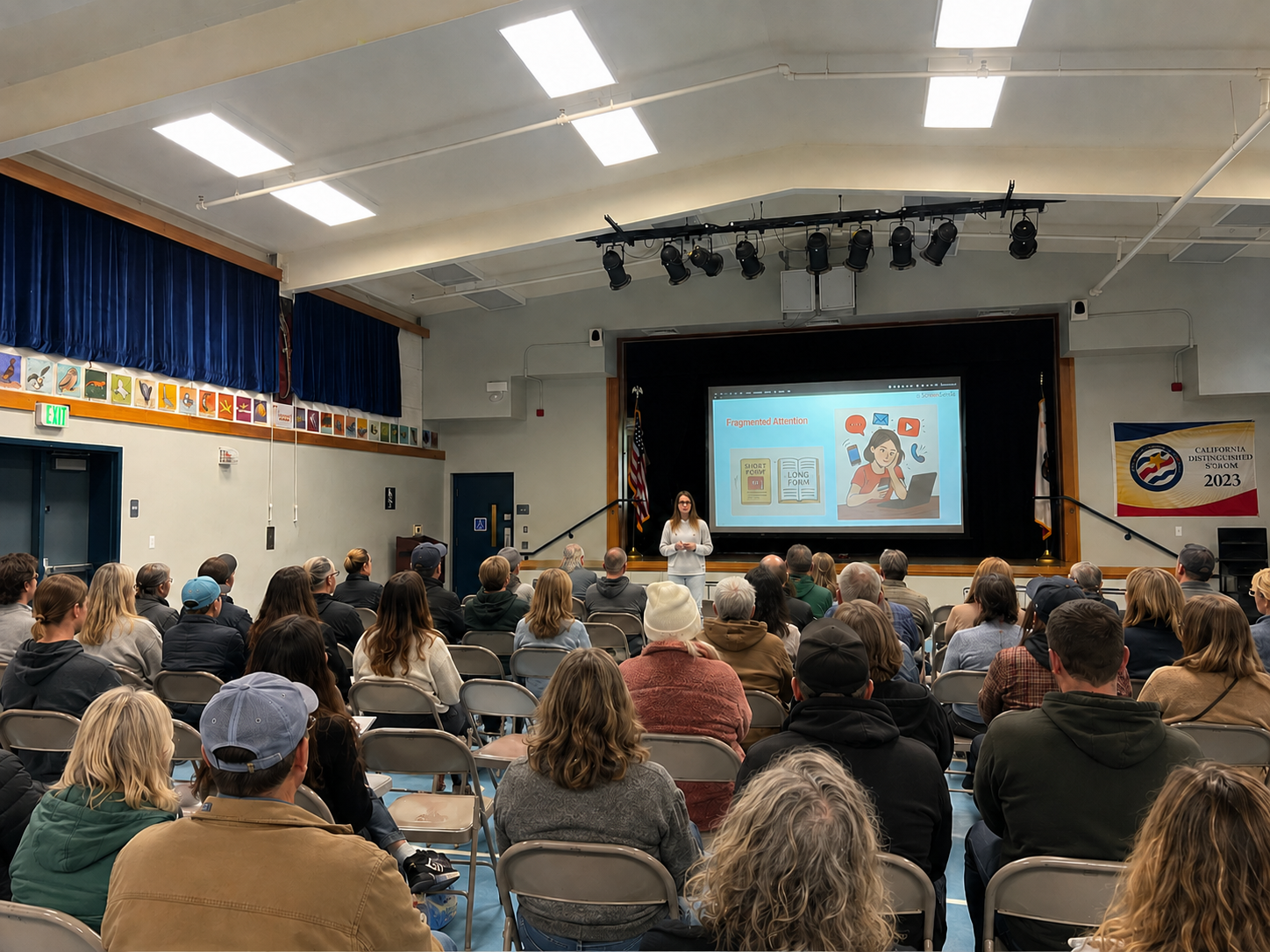
ScreenSense provides parent education programs to schools, clinics and organizations that support families.
Parents need help navigating today’s complex world of digital tech! Through our Parent Ed presentations, we aim to inform and empower our audiences with research-based practical advice and a call to community action. We acknowledge the complex and challenging work of raising kids in the digital age, and our tone is compassionate and non-judgmental. Our solution-oriented messaging encourages parents and caregivers of children aged 0-18 to prioritize in real life (IRL) childhood essentials and introduce tech slowly, in age-appropriate ways with guardrails and limits.
Our Parent Ed presentations are ideal for schools, districts, pediatric clinics, and any organization serving families. Our presentations are available in virtual and in-person formats. We encourage groups to co-host our events, sharing the cost and also reaching more parents and creating community at the same time.
So. Many. Screens.
Tablets, Smartwatches, YouTube Shorts, group texts, poop emojis, TikTok reels, Roblox, and smartphones...how does a parent navigate this evolving minefield? If you are new to our content, we recommend starting with our foundational Parent Ed presentation: “So. Many. Screens!”This presentation is available for elementary or middle school parents/caregivers or can be offered to a combined K-8 school community. “So. Many. Screens!” is available in English and Spanish.
In this solution-oriented presentation, we cover:
What current research is saying
How to get tech in check and reduce harm online
In-real-life (IRL) activities to prioritize for your child
Working together as a community to make this all easier. For schools in Marin County, we introduce Kids IRL, our county-wide community approach so parents/caregivers can slow down tech together.
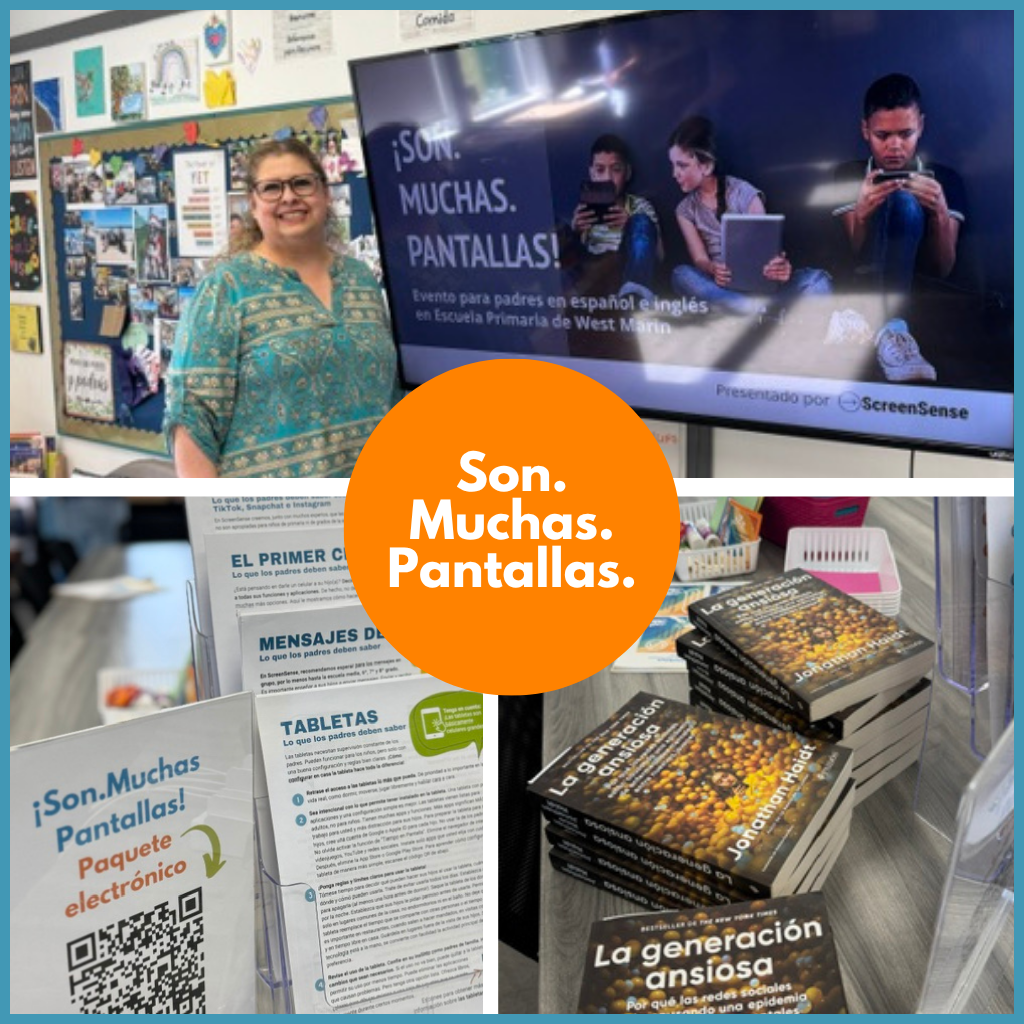
We are thrilled to offer So.Many.Screens in Spanish. When parents can engage with educational content in their primary language, they participate more fully, ask more questions, and walk away with deeper understanding. Providing Spanish-language presentations with culturally responsive framing (not simply translation) builds genuine trust with families and increases impact. We collaborate with local educator Estela Merida Godfrey to provide this presentation completely in Spanish to schools and organizations in Marin County, CA.
Delay Smartphones Together
Research shows that early and excess phone use impacts kids’ development and wellbeing. But, as parents, there comes a time when we want to be able to communicate with our kids, and when our kids want to be able to contact their friends. How do we meet these growing needs while avoiding unnecessary risks and harms so our kids are safe and healthy?
If your elementary school community, parent group, or organization is interested in starting a community effort (collective action) to delay smartphones, we recommend our presentation Taking Phones SLOWLY. Together. This presentation is intended for parents/caregivers of elementary aged children.
In this presentation we discuss:
How and why to delay smartphones as long as possible
Simple phone or watch options to meet the basic needs of childhood communication
Setting tech boundaries and guardrails around phone use
Prioritizing offline activities and other essential childhood activities
Creating community around shared tech norms to ease the pressure on families
For schools in Marin County, we introduce the Kids IRL Phone Pact, our county-wide pact for parents/caregivers to delay access to smartphones and social media together.
“One of the things I appreciate most about ScreenSense is their emphasis on building community around screen use and helping parents feel supported and aligned rather than isolated and doing the heavy lifting alone.”
Parent Ed by age/grade
Family time is increasingly impacted by devices and technology. Since tech-related challenges and solutions vary by age and stage of development, we offer Parent Ed presentations tailored to specific age-groups. These presentations include a summary of current research, practical ways to keep tech in check (or get ahead of what’s to come), in-real-life activities to prioritize, and an introduction to our community solutions here in Marin County to help take the pressure off.
We are happy to work with a live Spanish translator. This service would be provided and paid for by your school or organization. Our online resources and handouts are all bilingual.
Raising little ones in a big tech world. What parents of ages 0-5 need to know.
Tech can easily take over childhood—but it doesn’t have to! In these early years, our own habits and approach to tech as parents shape what young children learn about devices and technology. We discuss three proactive steps parents can take to insure that these early years are predominantly screen-free:
Modeling the tech habits we want to teach
Prioritizing screen-free exploration, play, and face-to-face connection
Delaying exposure to the most problematic types of tech
Getting ahead of the tech tsunami. What TK-4th grade parents need to know.
Your tone and approach to tech in these early elementary years help pave a healthy path for tech use in the future. In this presentation, we discuss current research on how the overuse of tech is impacting today’s youth, including effects on health and development. Changing current youth tech norms is possible and starts by prioritizing childhood essentials like movement, time outdoors, and imaginative play.
We discuss these five proactive steps parents can take to “get ahead” of all the more complicated tech choices that are coming their way:
Modeling the tech habits we want to teach
Creating a family approach to tech
Delaying exposure to the most problematic types of tech
Setting up guardrails for intentional tech use
Creating community around shared tech norms. For schools in Marin County, we introduce Kids IRL, our county-wide community approach for parents/caregivers to slow down tech together.

Tweens, Tech and Transitions.
Tech transitions are normal as our kids get older - as parents we need to adapt our approach accordingly. The 5th grade transition can catch parents off guard, as different communities and families may merge into the middle school years and expose kids to new pressures around technology. For families who have delayed giving a phone or watch, this can be a time when that decision is challenged and having a plan is key.
In this presentation, we cover:
What is happening developmentally in this pivotal year
Why it gets trickier to delay smartphones and what alternatives are available
Why delaying access to social media is essential
Group Texting 101
How tech pressures change in middle school and how to get ahead of it
In-real-life (IRL) activities to prioritize for your tween
Creating community around shared tech norms

What the algorithm is teaching your middle schooler.
How social media apps, YouTube and Chatbots are impacting middle schoolers.
Many parents believe technology helps kids stay connected, but it often brings unexpected challenges. From exposure to disturbing news events and unrealistic body ideals to harmful content and social pressure around drinking/drug use, tech can quickly overwhelm and crowd out the essentials of childhood.
In this presentation we discuss:
Current research on how technology algorithms and messaging is affecting today’s youth
The developmental needs to protect and tech risks to avoid in middle school
Guardrails parents can implement to reduce risks on apps like TikTok, Snapchat, Instagram, YouTube, Discord, WhatsApp and texting
How to navigate conversations, boundaries, and check-ins with your middle schooler
Creating community around shared tech norms to ease the pressure and support healthier digital habits for tweens. For schools in Marin County, we introduce Kids IRL, our county-wide community approach for parents/caregivers to slow down tech together.
Want a customized event?
We are happy to partner with schools and organizations to create customized events and presentations about desired topics. These can be stand-alone parent education presentations, expert panel discussions, or co-creating a series of events, workshops, or activities to facilitate collective action for your community. We have previously facilitated Anxious Generation book club discussions and led community discussions and panels after screenings of Screenagers films.
If you are interested in customized parent ed, please email us at info@screensense.org

If you are looking for a deeper dive into specific safety concerns around specific apps like Snapchat, Tik Tok, Instagram, Discord and YouTube we HIGHLY recommend pairing our presentations with a presentation from the Vigilant Parent Initiative. This is a free in-person presentation schools can schedule with the Marin County Sheriff's Department. We have attended one of these presentations and they are very informative if you want to get into all the nitty gritty and very eye opening! If you are interested in learning more, please contact the Marin County Sheriff’s office.